Today was a day of exploring part of Killarney itself, a town of about 14,000 people, and some of its important sites. The Killarney National Park is huge and begins right in Killarney, just steps away from the busy downtown area. So, after breakfast of Avocado Toast and coffee, I went exploring.
I thought Avocado Toast was a relatively recent trendy US breakfast food item, developed by millennials. So, I was surprised to find it on the menu at a local breakfast coffeehouse in Killarney. Doing some research, it looks like Avocado Toast has been around for nearly 100 years and perhaps originated in Australia. Who knew?
It seems that every culture/chef has a different “take” on it. This was offered on dense soda bread, with poached egg and spicy chili jam.
Ross Castle was built in the 15th Century and was the ancestral home of the Clan O’Donoghue Mor, then changed hands to the MacCarthy Mor. Lord Muskerry MacCarthy held the castle until it was surrendered to Oliver Cromwell during the Irish Confederate Wars. At the end of the war, the Brownes were able to prove that their youngest heir to the lands was too young to have participated in the rebellion and was therefore deeded the land. The Brownes never returned to Ross Castle however, instead built a mansion house near the Castle (we’ll get to that in a moment!) The castle remained a military barracks until the early 19th Century.
There is a legend that Lord O’Donoghue leaped or was sucked out of the window of the grand chamber at the top of the castle and disappeared into the waters of the lake along with his horse, his table, and his library. It is believed that O’Donoghue now lives in a great palace at the bottom of the lake where he keeps a close eye on everything that he sees.
The Brownes have owned land surrounding Ross Castle for nearly 400 years until it was all given to the Killarney National Park. As mentioned earlier, they did not come to Ross Castle to live, but built a mansion home nearby called Kenmare. This was the second home built on the sight.
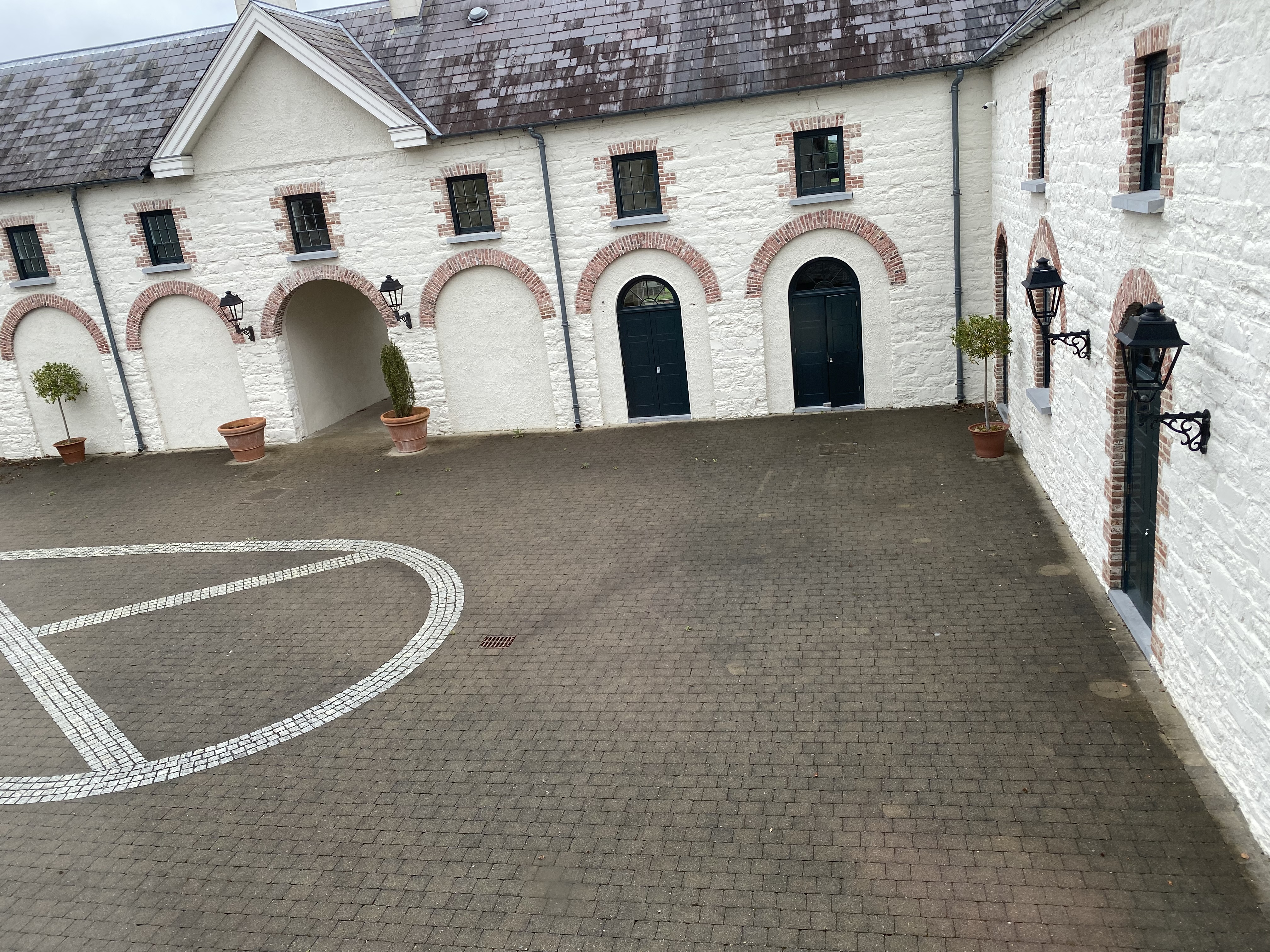
Notice in the second photograph above, Kenmare house is in the center. To the right of the house in the photo is the Block House. The Block House is where the stables and the servant quarters were. In the 1800’s a grandeur house was in order. Kenmare was demolished and a new house was erected on a new sight. But before it was even finished, a fire broke out and destroyed a large portion of the home, adding to the already extravagant cost. Below are photos of the house being built.
Not being able to afford to rebuild the home, the Brownes turned their eyes back to the original site of Kenmare and the Block House. In 1915 they had this converted into their home, now called The Killarney House. In the beginning of the 21st Century the house and lands were given to the Killarney National Park and renovated to become the visitor center of the Park.
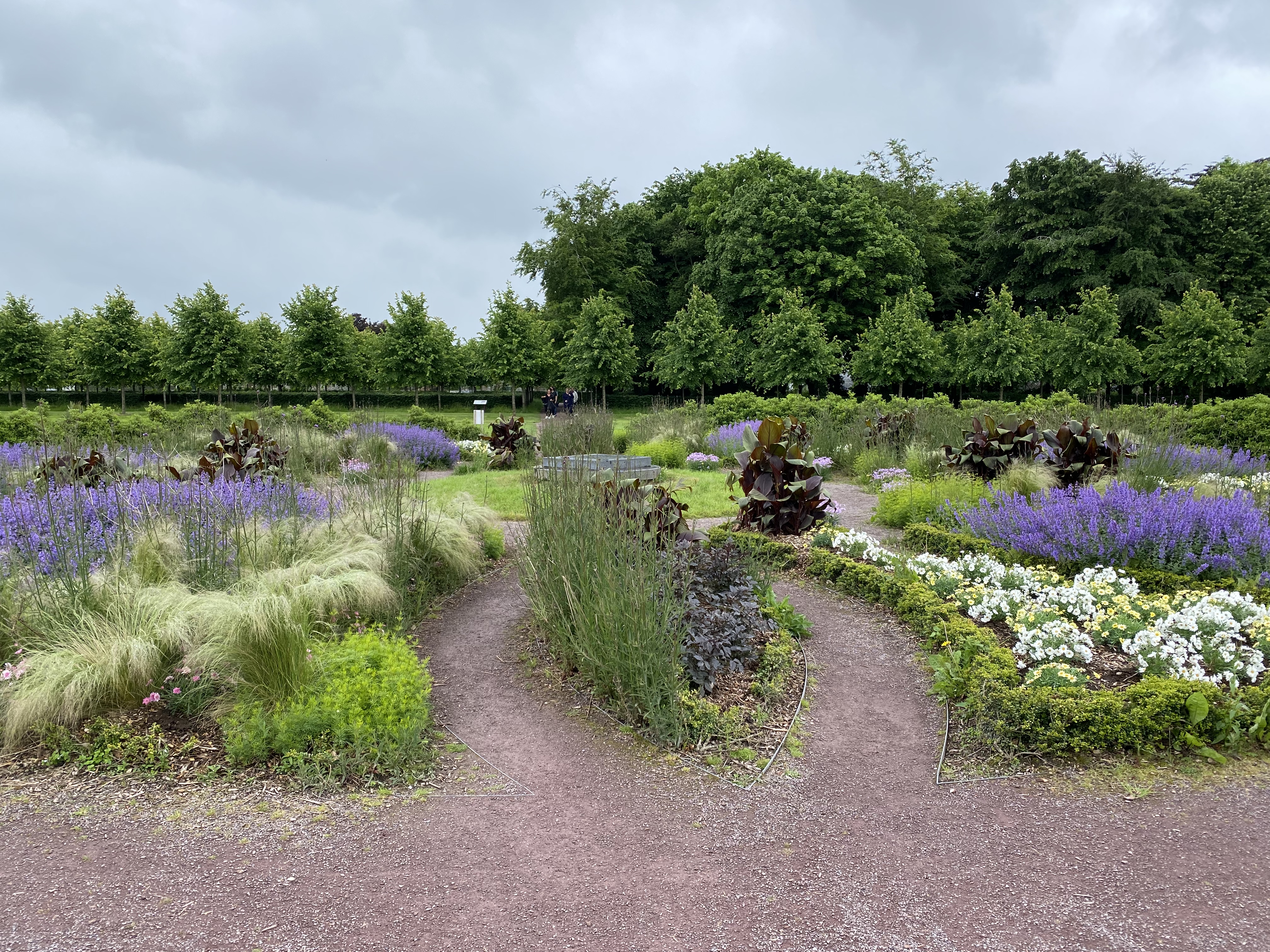
The Gardens:
After viewing the gardens, I took a bus that went to Torc Waterfall and climbed Torc Mountain, also part of the Killarney National Park, hiking some of the trails around the lake within this primeval forest.
Yes, I climbed this!
View from near the top!
Back down to hike the trails:
I then got back on the bus to visit Muckross House, another mansion on the other side of the lake.
Muckross House was completed in 1843 for Henry Arthur Herbert and his Scottish wife, Mary Balfour. The Herbert family hosted the English Queen Victoria and members of her family in their home in August 1861, but by the end of the 19th century they were bankrupt. In 1899, Lord Ardilaun, a member of the Guinness brewing family purchased the home. In 1911, the house was purchased by a wealthy American, William Bowers Bourn and was presented to his daughter, Maud and her husband Arthur Rose Vincent, as a wedding gift. Soon after her unexpected death in 1929, Maud’s husband and her parents gifted Muckross House and its Estate to the Irish Nation. No photographs were permitted to be taken inside, but the entire house is kept as the family had it. The house was designed by well-known Victorian architect, William Burn, of Edinburgh. He died in 1870. I need to do more research into this architect, as my own house, built in 1871, resembled this house on the inside, but on a MUCH (and I do mean MUCH) smaller scale. Muckross House is 16,000 square feet and ours is only 4,000. However, the central part of the home, the layout and flow of the house, and details felt so much like our own. Perhaps a student of his designed our house for everyday consumers in the US?


Within the Gardens of Muckross House is a restaurant. I had a salmon salad and the largest of some kind of pastry dessert I could possibly have (don’t judge - I climbed a mountain earlier!). It was a puff pastry with lemon curd and whipped cream.
After finishing lunch, I walked to Muckross Abbey (even I couldn’t justify that dessert without more walking!)
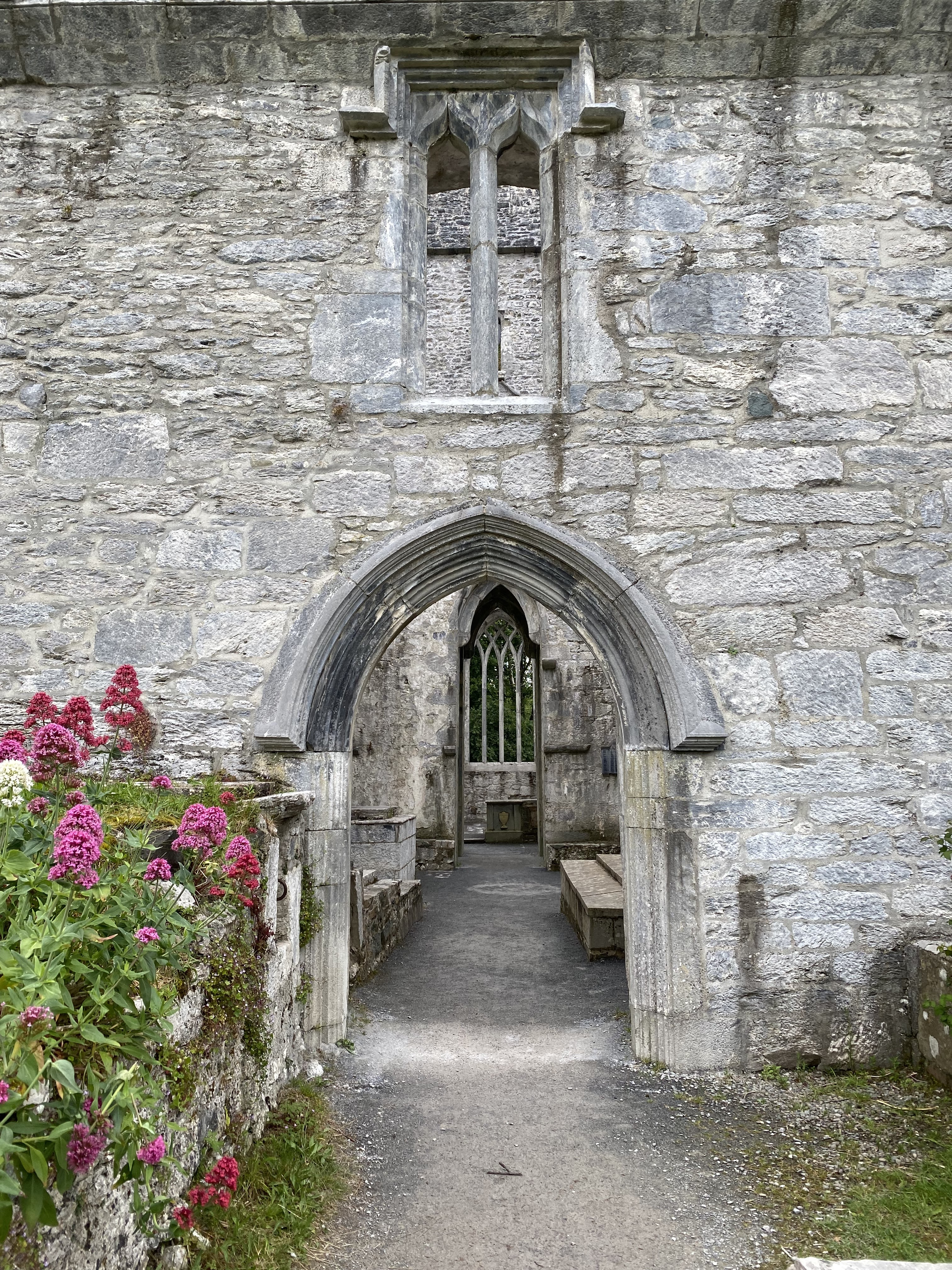
The Abbey, founded in 1448 as a Franciscan Friary by MaCarthy Mor. The friars were often subjected to raids by marauding rebellious groups in the nearby hills. In 1541 the Order of Franciscan Friars were suppressed by King Henry VIII, but were formally re-instated in 1612. The entire band of Friars were eventually driven out of the Abbey by Oliver Cromwell in 1652. Now, roofless, the Abbey is otherwise fairly well preserved.
I had plans to attend a community concert this evening, but at 6:30 decided I’d take a “wee nap” (as they’d say here in Ireland), so that I didn’t fall asleep during the concert which began at 8pm. At 9:30 I woke up. So much for a wee nap and the concert. Oh well.
I had a lot of various thoughts going on in my head today based on today’s experiences, which I’ll share in a later post when there aren’t so many other things to offer. But they have to do with a “trapped bird”, the voice of women, this Sabbatical time, and the ruined Abbey. Originally, I thought all of these were random thoughts without much cohesion. But just now, having written this list of the thoughts I want to return to, I see that perhaps nothing is random. More for another day - it’s after midnight here.